Building for the next billion
I take companies into markets they do not yet understand, and prove whether the opportunity is real before anyone commits serious capital. Small, fast, structured steps rather than one expensive bet. Twenty-five years of building and running businesses in exactly these markets, applied to yours.

Introduction
Why models built elsewhere fail here, and what it takes to build something that does not.
Start here
Pick the closest fit and I will show you how I would approach it.
Most entry plans fail on the second question, not the first. I start with what the market will actually pay, how it pays, and who already owns distribution, then design an operating and compliance structure that survives it. I can run the pilot myself rather than hand you a plan.
The opportunity
Hover or tap any figure for the detail. The growth markets of the next thirty years are African. Not as a moral argument, as a demographic and commercial one. The consumers, the workers and the transaction volume are moving, and most companies have no working knowledge of where they are moving to.
Sources · UN World Population Prospects · ISS African Futures · UN DESA World Urbanization Prospects · World Bank · GSMA Mobile Economy Africa · GSMA State of the Industry, mobile money · UNCTAD World Investment Report · World Bank on the AfCFTA · African Union
Most plans for “Africa” are written as though it were one place. It is fifty-four sovereign countries, each with its own regulator, currency, tax regime, customs authority and consumer reality, spread across five regions that trade more with the rest of the world than with each other.
Language alone reshapes an entry plan. Twenty countries work in English, eighteen in French, six in Portuguese and eight in Arabic. A go-to-market built in Nairobi does not travel to Abidjan without being rewritten, and the partner who can open doors in Lagos is rarely the one who can open them in Dakar.
This is the argument for going country by country rather than continent-wide, and the reason a shortlist of two or three markets beats a strategy for all of them.
Population and median age: UN World Population Prospects. GDP, GDP per capita and growth: IMF and World Bank estimates. Rounded, latest available year. Growth is omitted where conflict makes an estimate unreliable. 2030 figures are compounded from current rates, not a forecast.
Companies rarely decline these markets on the numbers. They decline them because nobody in the building has been there, the information is thin and contradictory, and the only options on the table look like a full country entry or nothing. Most developed economies trade less with the whole continent than they do with a single mid-sized neighbour, and it is unfamiliarity rather than economics that keeps it that way.
And because the continent is 54 different regulatory regimes, currencies, languages and consumer realities, generic research answers almost nothing worth acting on.
Exploration does not have to be expensive. It has to be structured, sequenced and run by someone who already knows the ground, so each step costs little, answers a real question, and earns the right to the next one. Move faster, learn quicker, risk less.
Field notes
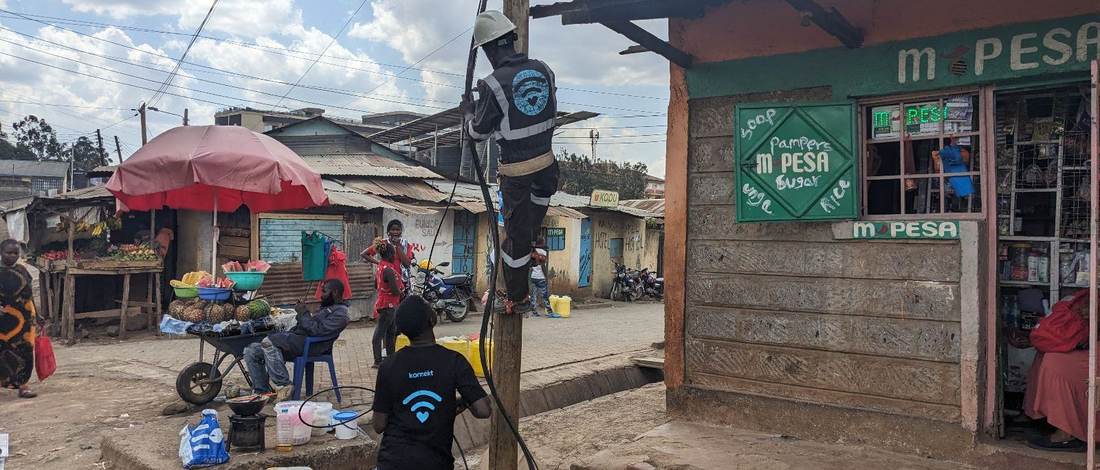
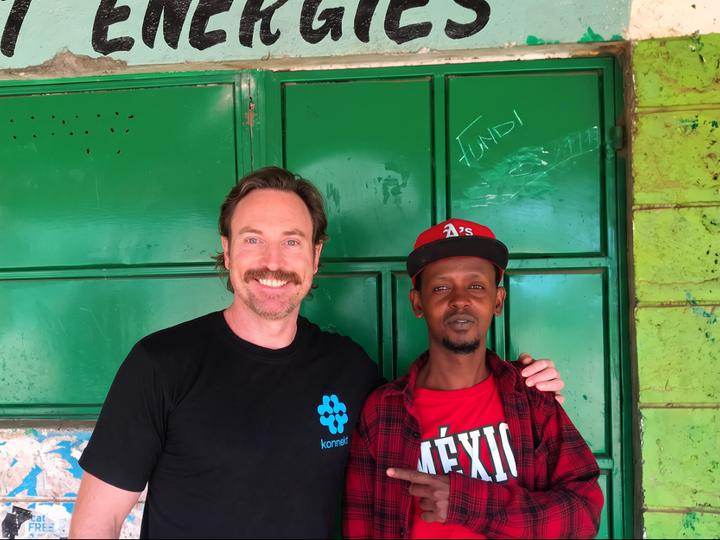
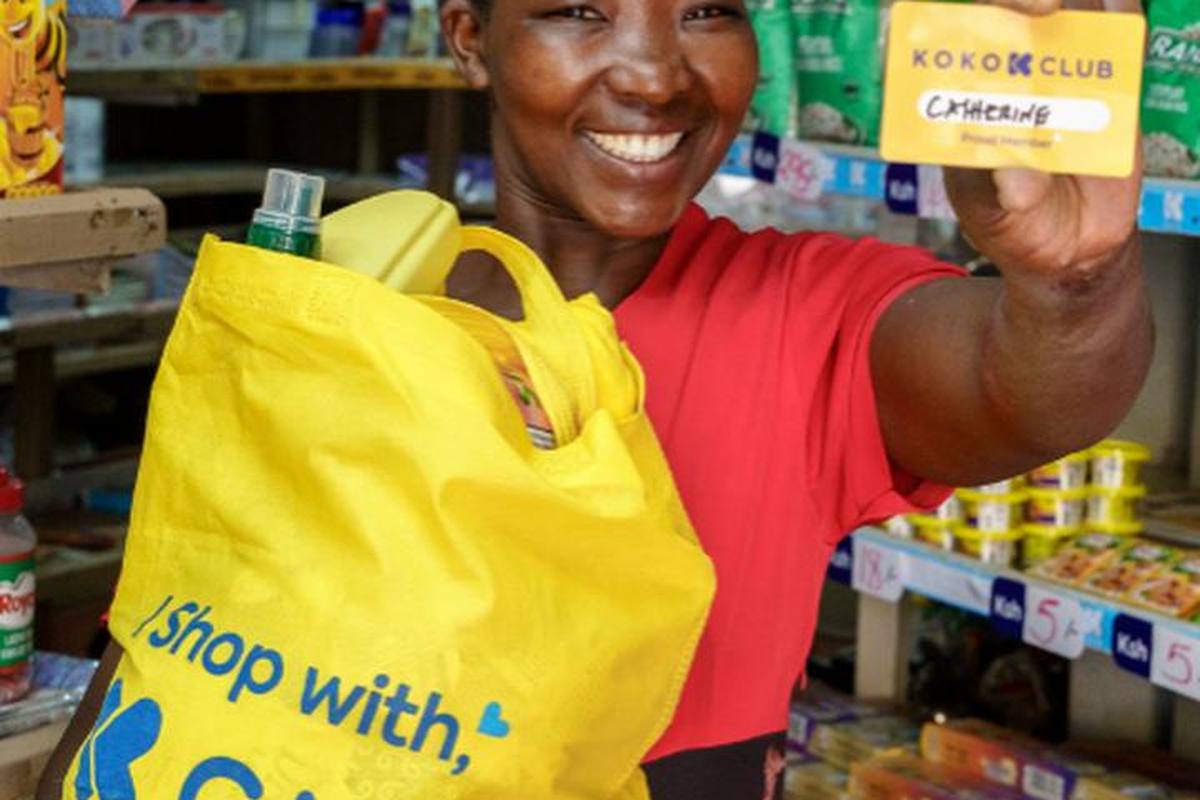
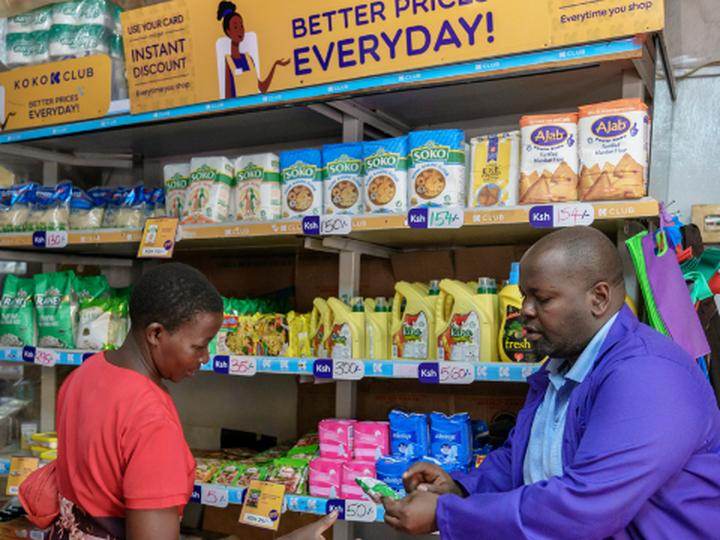
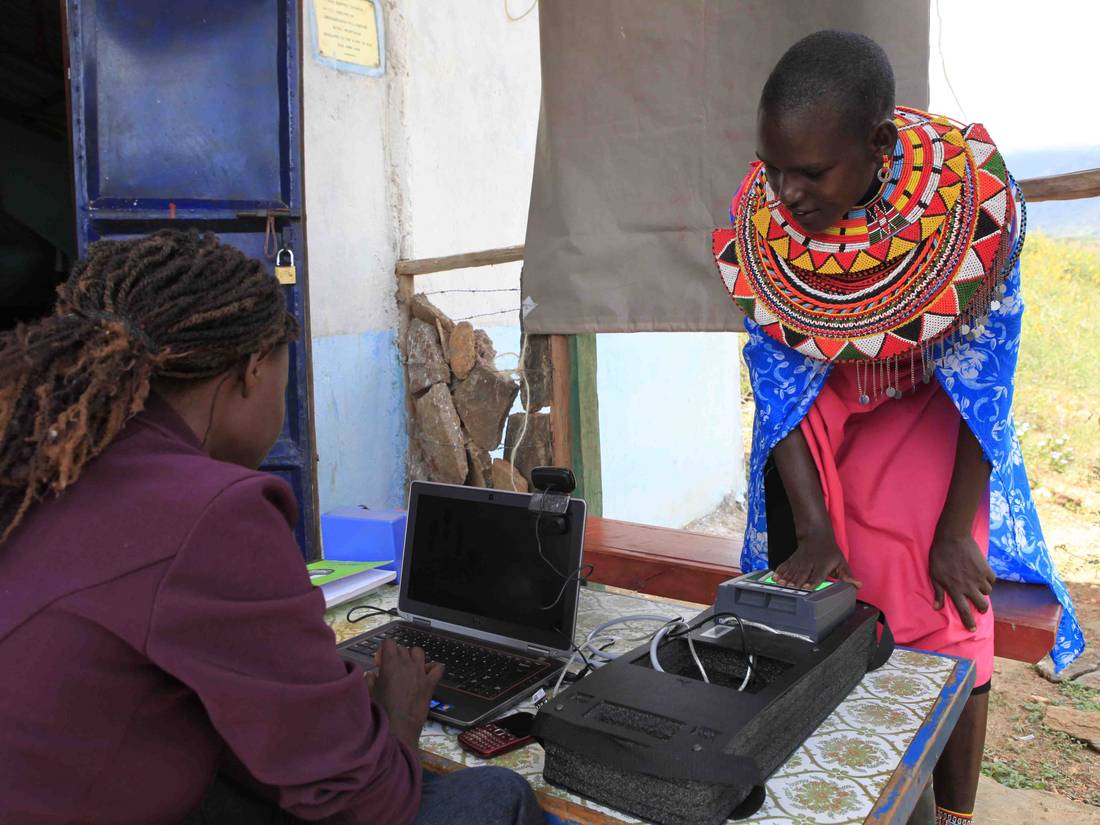
Those nine numbers tell you the market is large. They stop exactly where the work starts. These markets are not thinly researched by accident: the data does not reach the street, the household or the shop. Understanding them, then designing and building for them cost-efficiently enough to be commercially viable, is a different discipline. These were taken while doing it.


None of this was in the data. That is the argument for going and looking before you commit: not that the research is wrong, but that it runs out at the point where the decisions begin. How the thing gets designed, what it costs to build, what the customer will actually pay, and whether the numbers still work at the fourth street rather than the first.
The Waypoint Method
A waypoint is a fixed point you confirm your position at before committing to the next leg, and a point you can turn back from. Every one ends in a decision, not a deliverable you file. You can walk away at any point having spent a fraction of a full entry and learned a great deal. Timings are indicative and depend on the market, the sector and how much regulatory ground has to be covered.
Desk work plus my own market knowledge, aimed at killing weak options cheaply. We narrow a region to two or three candidate markets and write down what would have to be true for this to work.
A short options paper your board can read in ten minutes, with a recommended shortlist and the questions that only fieldwork can answer.
Decision: which one or two markets are worth putting a person on a plane for.
Runs alongside any waypoint
You do not need an entity, an office or a country manager to be present in a market. For companies testing the water, or already selling but with nobody on the ground, I can act as your representation in market.
It is the cheapest way to be real to a partner, a regulator or a customer who wants to know there is somebody they can meet.
What that covers
Central Bank of Sierra Leone · Regulator engagementIn your market, not mine
Not everything gets solved on the ground in Nairobi or Lagos. Some of it has to be solved in your building, with the people who will actually run this, the ones who control the budget, and the executives who need to believe it before they fund it.
I travel to you. Australia, Europe, Southeast Asia or North America, for a week or a series of visits, closing the gap between what your team knows and what the market will require of them.
It runs both ways. When your team, board or investors come out, I host them here: market immersion, partner and regulator meetings, and the due diligence visits where a model either survives contact with a street kiosk or it does not.
What that looks like
Working session with a commercial team
Investor due diligence, in marketWork products
Typical deliverables across the arc, from a first look at a market to a business running in it.
Who I work with
Different starting points, same underlying problem: a market that matters and nobody in the building who knows it first hand.
Typically $20m to $500m revenue · Australia, Europe or North America · Industrial, agtech, medtech, software, consumer goods · No African presence
You have a product that works, margins that hold, and a domestic market that is running out of room. Africa keeps coming up in board papers and nobody can say anything useful about it. The last three attempts to look into it produced consultant decks that all said the opportunity was large and none of which told you what to do on Monday.
Where we would start: Stage one. Two to four weeks, two or three candidate markets, and a decision about whether anyone gets on a plane.
“We think there is something there, but we do not know enough to know.”
Ground Truth · Free assessment
Ground truth is the term for what you only learn by going and checking. Eight pillars and fifty checks, drawn from the assessment I run with clients, plus three questions about where you actually are. Twelve minutes, scored as you go. You will see where you stand on screen, and can take away the full written assessment along with two documents written for internal circulation. Finishing it also opens the booking link for a free introduction call.
Before you start
First, three questions about your situation so the result points at the right service. Then score each statement from 1 to 5 for how true it is of your business in the market you are considering. Be honest rather than generous: a low score is a finding, not a failure. Nothing is stored or sent unless you choose to request the written report at the end.
Selected work
Four mandates that show the method. Open any one for the detail.
How I work
The rules I apply whether the mandate is a two-month look at a market or a two-year build.
Research, pilots and product testing come before capital, not after it. Find out what is wrong while it is still cheap to be wrong.
Small, sequenced steps, each ending in a decision. Stopping after stage one having learned the market is not for you is a good outcome, not a failed project.
Fifty-four countries, each with its own regulator, currency, channel and customer. Answers are built country by country from the ground up, never extrapolated across a continent.
Not the customer a spreadsheet assumes. Pricing, packaging and collections built around how people genuinely earn and spend.
Capital in these markets is scarce and expensive, so unit economics decide how far each dollar goes. Payback shapes rollout sequencing, pricing and product.
Nothing replaces being in the market. I bring the evidence back in a form your board can see for itself, rather than a summary they have to take on trust.
I take on a limited number of engagements so that each one gets real attention rather than a share of it. If I am full, I will tell you, and tell you when I am not.
For work that outgrows one person, I bring in a network of researchers, field teams, film crews, legal and technical specialists I have worked with for years across these markets. You deal with me throughout.
Capability areas
Country prioritisation, entry strategy, operating and compliance structure, in-market execution.
Multi-market licensing and franchise architecture for asset-heavy platforms seeking capital-light expansion.
Group-level partnerships paired with local market OpCo implementation and go-to-market.
Equity and grant funding, investor engagement, round structuring, territory-based allocation.
Ongoing engagement with development finance institutions and strategic corporate funders.
Management buyouts, shareholder exits and cap table restructuring, led from the principal side.
Unit economics rebuild, margin and burn analysis, capital efficiency, rollout sequencing.
Adjacent revenue lines built on existing infrastructure, distribution and customer bases.
Research, design, strategy, technology development and operationalisation.
First-principles research, pilot design and product testing grounded in Human-Centred Design.
Commercial, innovation and distributed teams across markets, embedded alongside founders.
On-the-ground validation of traction, unit economics, distribution and management claims.
Your named presence in market: partners, regulators, pipeline and suppliers, held between your visits.
Field research captured on film and in photography, turned into material that moves a board or a regulator.
Workshops, board briefings and market immersion in your own market, with playbooks so the knowledge stays.
Sector coverage
Geographic coverage
Writing
Notes from operating in these markets rather than commentary about them. Filter by topic.
The metrics the industry runs on were built for markets that are already connected. What happens to them when the next billion users arrive on entirely different terms.
Read the pieceFunding is not the constraint people assume it is. Winning the mass market takes a model that works at the price the market can actually pay.
Read the pieceBuying connectivity in small, rationed increments shapes behaviour in ways the industry rarely accounts for, and it holds people back from the thing they went online for.
Read the pieceAccess is not the same as nourishment. What people can actually do with the connectivity they have, and why the gap matters commercially as well as socially.
Read the pieceAdoption in these markets turns on trust more than price or product. Where that trust is earned, and how quickly it can be lost.
Read the pieceKenya is held up as a digital success story. The households still outside it will not be reached by extending what already exists.
Read the pieceWhere licensed provision does not reach or does not fit, something else fills the gap. What the informal market tells you about demand and about regulation.
Read the pieceWhat changes in a team when the default answer shifts, and why that matters most in businesses trying to build something that has not existed before.
Read the pieceAbout
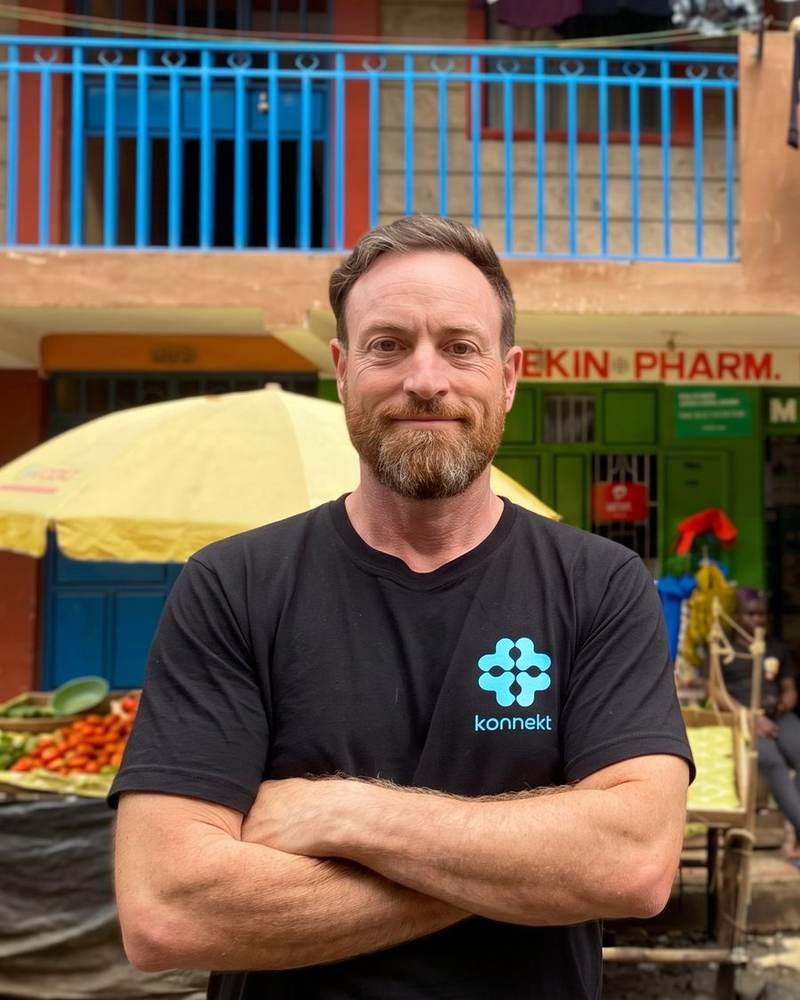
An operator with 15 years of building and scaling telecommunications, connectivity and digital services businesses across 20+ African markets and Southeast Asia.
Most people advising on emerging markets have analysed them. I have carried the P&L, building a fully licensed, regulated infrastructure business from zero in Kenya, where debt is expensive, the currency moves against you and customers pay in daily increments.
Currently Founder & CEO of Konnekt Digital Networks, a fully licensed fibre network operator, ISP and digital services company serving low-income urban households in Kenya. Previously an Executive Committee member at KOKO Networks, a climate technology business, brought in to lead international expansion and build the group's multi-market licensing and franchise model alongside the Founder & CEO, then founded and led Digital Innovation within KOKO Labs. Earlier, EVP Global Sales at Youtap, leading mobile payments deployments across Africa and Southeast Asia.
Emerging markets rarely fail on demand. They fail on misapplied models. These economies scale when connectivity, payments, content and commerce are designed as one ecosystem, and when expansion is de-risked before it is scaled.
Fifteen years ago, in front of a paper map, about to work on national identity programmes across West and North Africa. Everything since has been the same argument in different sectors: the model has to be built for the market, not adapted to it.
MBA, International Management & Strategy. Macquarie University Graduate School of Business, Sydney and ESSEC Business School, Paris. Master's thesis on doing business in China, including field-based research in-country.
IDEO U: Advanced Design Thinking, Insights for Innovation, Storytelling for Influence, Unlocking Creativity.
Regular speaker at leading industry conferences including ITW Africa and Africa Tech Festival, on digital infrastructure, connectivity and market expansion in emerging economies.
ITW AfricaEnglish (native). French (professional working).
Contact
I take on a limited number of engagements, so the free call is reserved for people who have spent twelve minutes working out where they actually stand. It also makes the conversation far more useful: I arrive knowing your situation rather than asking you to describe it.
Take the assessment first Eight pillars · Fifty checks · Around twelve minutesThirty minutes. Tell me what you are trying to do and where, and I will give you a straight view on whether I am the right person and what a first piece of work could look like. If I am not the right fit, I will say so and tell you what to look for instead.
Book a free introduction call Thirty minutes · Free · No obligation · I work around your time zoneOr send a message instead
Tell me what you are trying to do and where. I will reply with a view on whether I am the right person, and what a first piece of work could look like.
Outside the work: proud father to two children, community volunteer establishing Kenya's first surf lifesaving club, and currently coaching my son with the goal of him representing Kenya in surfing at the 2032 Olympics.